
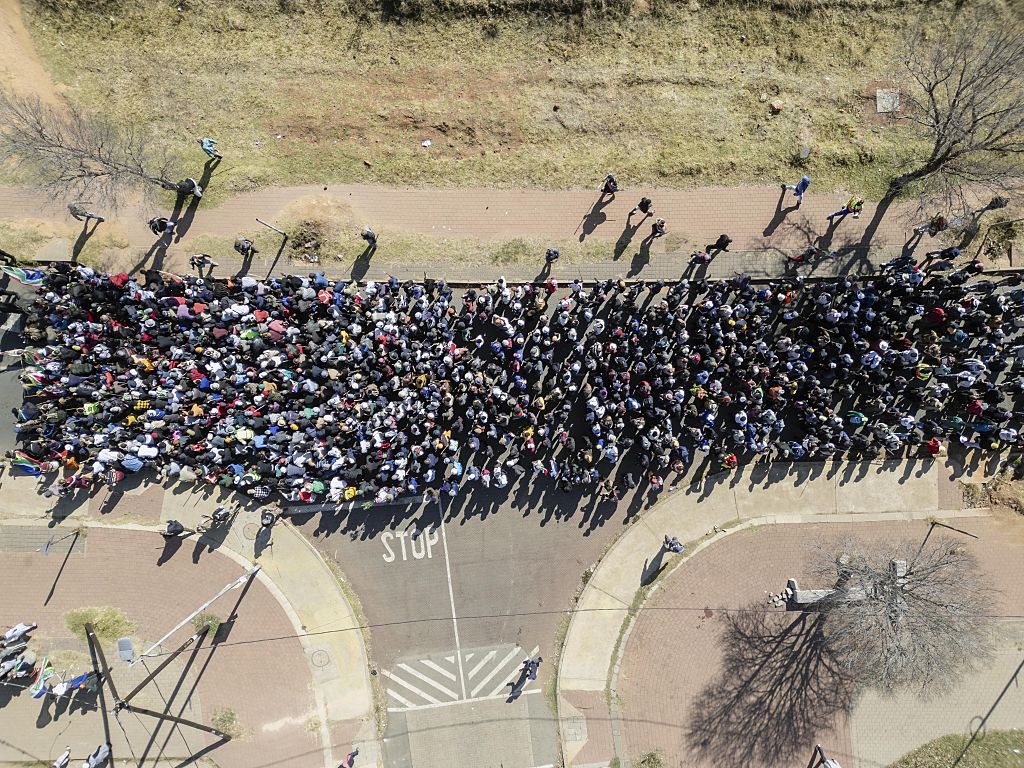
South Africa is on high alert ahead of planned nationwide protests on June 30, with anti-illegal immigration groups calling for demonstrations across several provinces. While organisers have maintained that the action will be peaceful, government has rejected calls for a “national shutdown”, insisting that Tuesday will be treated as a normal working day.
The protests are being organised by groups including March and March and United South Africa, who are demanding stricter immigration enforcement, stronger border controls and the deportation of undocumented foreign nationals. According to Eyewitness News, organisers say their campaign is rooted in law enforcement rather than xenophobia and have warned that demonstrations could continue beyond June 30 if government fails to address their demands.
The demonstrations come after weeks of growing anti-immigration sentiment in parts of the country, particularly in KwaZulu-Natal, Gauteng and the Western Cape. The Financial Times reports that businesses, freight operators and communities have been preparing for possible disruption, while security agencies have redirected resources and placed additional personnel on standby amid fears that tensions could escalate.
Government has sought to reassure South Africans that June 30 will not be a national shutdown. In a statement published by SAnews, authorities said Tuesday would remain a normal working day and warned that anyone engaging in violence, intimidation or vigilantism would face the full might of the law.
As tensions have intensified, misinformation has also spread rapidly online. Viral social media posts falsely claimed that government had ordered all undocumented foreign nationals to leave South Africa by June 30 or face arrest. However, AFP Fact Check found that the notices were AI-generated and confirmed that no such government directive exists.
Although immigration is the central issue driving the demonstrations, analysts argue that the protests are rooted in broader socio-economic frustrations. In its analysis of the planned protests, Reuters reports that South Africa’s persistently high unemployment rate, inequality and poor service delivery have fuelled anti-immigration sentiment, with undocumented migrants increasingly becoming scapegoats for deeper structural challenges.
Reuters also points to data from Statistics South Africa showing that migrants accounted for approximately 4.1% of the country’s population in 2023, while foreign nationals represent roughly 6% of South Africa’s prison population, many for immigration-related offences rather than violent crime. The publication further cites a 2018 World Bank study suggesting that migrants can contribute positively to economic growth through entrepreneurship and job creation.
The possibility of protests turning violent has also raised concern among security experts. The Institute for Security Studies (ISS) warns in its analysis that while protest organisers have publicly distanced themselves from violence, there remains a significant risk that smaller groups could exploit the demonstrations to target foreign nationals. The organisation has urged both police and protest leaders to ensure demonstrations remain peaceful and unarmed.
Security forces have since increased deployments across identified hotspots, while government has continued to urge South Africans to exercise their constitutional right to protest peacefully.
Whether June 30 passes peacefully or descends into unrest is likely to shape South Africa’s ongoing debate around immigration, border security and government’s ability to address the economic conditions that continue to drive public frustration.