For women across Ekurhuleni, the places that form part of everyday life (roads, taxi routes, open fields, neighbourhood streets and parks) are increasingly being viewed through a different lens.
Since July, the bodies of at least 11 women have been discovered in Ekurhuleni, with police investigating the circumstances surrounding the deaths and examining whether there are links between some of the cases. The latest body, according to SABC, was discovered in Springs on September 27
The investigation has unfolded across communities including Kempton Park, Olifantsfontein, Kwa-Thema, Dawn Park, Tembisa and Springs.
Police have been careful not to confirm that all the cases are connected. Investigators have said there are differences between some of the cases and that there is currently no conclusive evidence that a serial killer is responsible.
Here is how the cases unfolded.
15 July — Busisiwe Mahlangu
The first woman in the official Ekurhuleni investigation was Busisiwe Mahlangu, whose body was found in Kempton Park on July 15.
The South African government’s Inter-Ministerial Committee on Gender-Based Violence and Femicide later listed Mahlangu as the first of nine women whose bodies had been discovered in Ekurhuleni between July 15 and September 17.
At the time, the discovery did not yet signal the scale of the investigation that would emerge two months later.
3 August — Itumeleng Kekana
The body of Itumeleng Kekana was discovered in Kempton Park on August 3.
She was later identified as the second woman in the government’s official chronology of the Ekurhuleni cases. Reporting by TimesLIVE said Kekana, 32, had previously been reported missing and that her body was found near Great North Road in Pomona, close to the Max informal settlement.
26 August — Nomfesane Mjobo
On August 26, Nomfesane Mjobo was found dead in Kempton Park.
She was the third woman listed in the government’s official chronology.
7 September — Body found in Clayville
An unidentified woman’s body was discovered floating in the Clayville River in Olifantsfontein on September 7.
The woman was initially unidentified. Police subsequently included the case in the broader investigation into the deaths of women in the area
The discovery also brought the investigation closer to communities around Thembisa and Olifantsfontein.
10 September — Gracious Nkomo
Gracious Nkomo, 28, was found in Kempton Park on September 10.
Her death was included among the cases being investigated by the specialised team established to look into the killings.
12 September — Elizabeth “Tsontso” Moselakgomo
The disappearance and death of Elizabeth “Tsontso” Moselakgomo, 38, brought renewed national attention to the cases.
Moselakgomo was found in Kempton Park on September 12 and was later identified as the sixth woman in the government’s official chronology.
Her death also resonated with South Africa’s running community because she had been out running before she disappeared.
The case highlighted a fear familiar to many women: whether ordinary activities such as walking or running can be undertaken without constantly calculating the risks.
14 September — Another woman found in Olifantsfontein
Another woman’s body was discovered in Olifantsfontein on September 14.
Authorities initially withheld her identity while efforts were made to notify her family.
She was the seventh woman listed in the government’s September 20 chronology.
15 September — Dineo Motapane
The body of Dineo Evelyn Motapane, 38, was discovered in Kwa-Thema on September 15.
She was the eighth woman in the official Ekurhuleni chronology.
The discovery had a direct impact on the Kwa-Thema community.
On September 17, residents gathered for a candlelight service to remember women who had lost their lives to gender-based violence and femicide. SABC News reported that residents said they were tired of the violence and fear gripping the community.
17 September — Jabulile Ntimba
The body of Jabulile Ntimba was discovered in Dawn Park on September 17.
She was the ninth woman listed in the government’s official chronology.
The discovery prompted government to elevate the investigation.
The Inter-Ministerial Committee on GBVF said a multidisciplinary specialised investigation team had been established and that the team would be coordinated by the Deputy National Commissioner for Detective Services.
20–21 September — Three arrests
Three people were arrested in connection with the murder of Ntimba — a man and two women.
The two women, Fortunate Masilela and Tsakane Nester Msithini, subsequently appeared in the Boksburg Magistrates’ Court and faced murder-related charges.
The man who was arrested with them was released without being charged. Police have not established that those suspects are responsible for the other women’s deaths.
According to Reuters, investigators were continuing to determine whether the nine cases were linked.
26 September — 10th woman found in Tembisa
A woman’s body was discovered at Mooifontein Cemetery in the Vusimusi section of Tembisa South on September 26.
The discovery brought the number of women’s bodies found in Ekurhuleni since July to 10 at that point. Police confirmed that the investigation was in its early stages.
A suspect was subsequently arrested in connection with the murder. SABC News later reported that the victim was Ntombifuthu Nxumalo and that police were investigating the circumstances of her death.
27 September — 11th woman found in Springs
On September 27, police discovered the body of another woman in Struisbult, Springs, near a railway line.
SAPS said the woman was estimated to be about 20 years old and had not yet been identified.
Gauteng police commissioner Lieutenant General Tommy Mthombeni said the woman had an injury to her neck indicating that she may have been strangled.
SABC News reported that the body was found in an open veld after being spotted by security personnel patrolling the area.
The discovery further heightened fears in Ekurhuleni as police continued investigating the string of deaths.
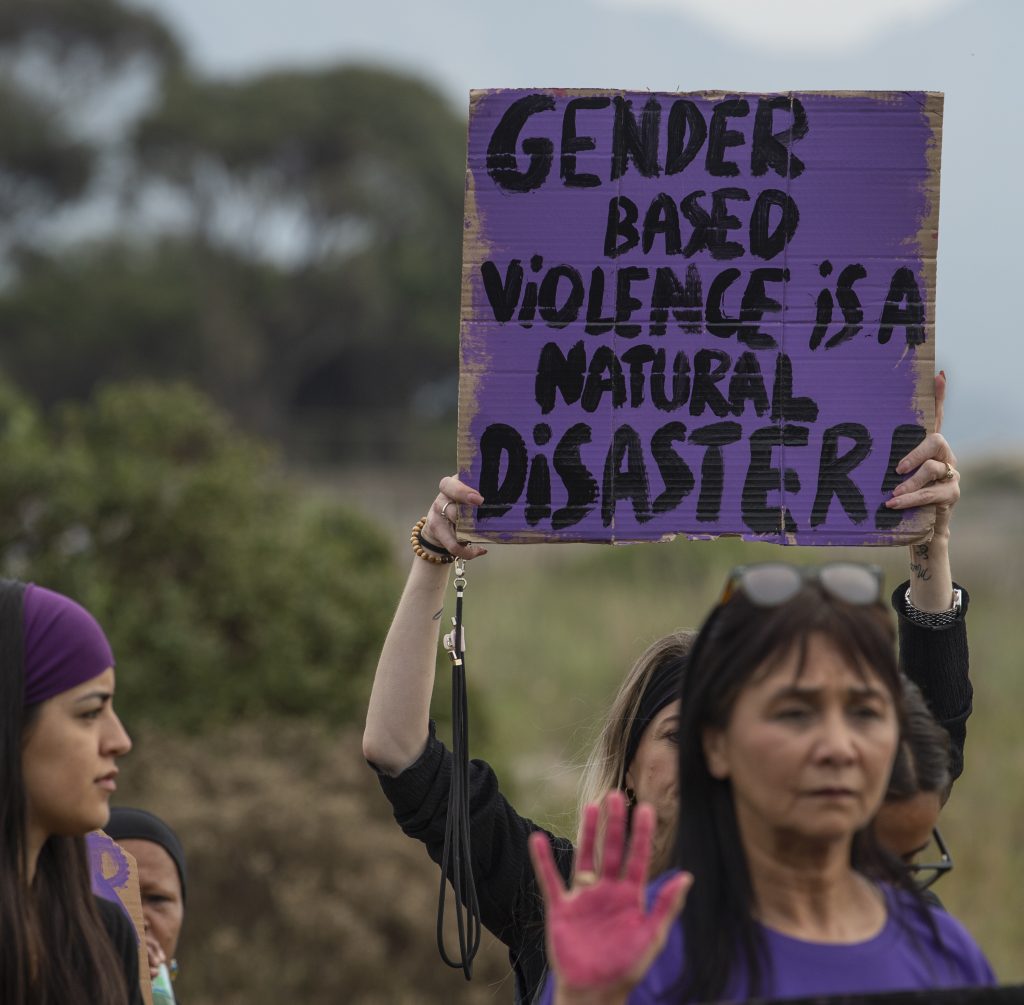
The investigation is unfolding against the backdrop of South Africa’s broader gender-based violence crisis. But for women living in communities where the bodies have been found, the issue is not simply what police eventually establish.
It is what happens in the meantime.
A woman walking to a taxi rank before sunrise may think twice about taking the same route. Someone coming home after a late shift may call a family member to say they have arrived safely. A runner may reconsider going out alone.
For Dr Thelela Ngcetane-Vika, Senior Lecturer at the Wits School of Governance, the psychological impact of GBV is difficult to capture in statistics.
“The monetary estimates, they give us a tangible understanding of that impact on the African economy. However, the social, the psychosocial aspect sometimes are not adequately captured.”
She says underreporting also makes it difficult to establish the full scale of the problem.
“Not all GBV related cases are reported, and people may be scared for one reason or another, of the fallout, family fallout, or friends fallout.”
Those concerns can include family relationships, friendships, reputation and social stigma.
“There is also underreporting or insufficient data. Although we’re seeing a resurgence of reports, there is still that. The underreporting, in my view, makes it challenging to accurately assess the true impact of GBV.”
Ngcetane-Vika describes this as a “non-monetary human cost” that affects victims, families and communities.
“It truly, truly inflicts a significant emotional, psychological, and just physical harm, not only on the victims but to all of us.”
That impact can extend into everyday activities.
For women, something as ordinary as taking a walk or going for a run can become associated with danger.
“You always worry if you are taking a walk or a jog, then you’re worried if you hear footsteps or that kind of thing because it happens everywhere, it happens in homes, it happens in environments, in communities that we live in.”
For women in township communities who rely on public transport, walk to taxi ranks or work late shifts, those fears can affect how they move through their own neighbourhoods.
The response from Kwa-Thema residents illustrates the community-level impact.
At the September 17 candlelight service, resident Thembani Masina said residents were tired of living in fear and demanded action against perpetrators.
Despite growing public concern, authorities have not established that all the deaths are connected.
Police are investigating individual cases while examining possible links.
A report by The National noted that police had identified differences in the cases, including possible motives and methods, and that there was no conclusive evidence that a serial killer was responsible.
That distinction is important as social media speculation continues to circulate around the killings.
For families waiting for answers, however, the uncertainty remains.
The question of whether the cases are connected sits alongside another question:
Who is safe?
The consequences of violence can also last long after an individual case disappears from the news cycle.
Ngcetane-Vika says GBV can create trauma that is carried through families and communities.
“There is really, really no doubt of the deep intergenerational trauma it also causes to families, to communities.”
Children can witness violence in their homes. They can lose mothers, sisters or other relatives. They can grow up associating relationships, public spaces or certain behaviours with fear.
Those consequences are difficult to measure.
The psychological impact can also affect people who have not personally experienced violence.
For Ngcetane-Vika, repeated exposure to GBV can itself become emotionally overwhelming.
She says the violence is so difficult to process that she sometimes avoids graphic images and reports about gender-based violence.
That speaks to a broader reality: the impact of violence can spread beyond the person directly attacked.
As of September 27, 2026, the investigation remains active.
Police need to establish the circumstances surrounding each woman’s death, identify perpetrators where possible and determine whether any of the cases are connected.
The government has urged people with information to report it directly to police rather than circulating information through social media or informal community platforms.
For communities, the demand is broader: answers, accountability and safer environments.
The discovery of 11 women’s bodies has put Ekurhuleni under intense scrutiny.
But the women who live in these communities are still going to work, taking taxis, walking home, running, raising children and moving through the same streets.
And as the investigation continues, so does a question that cannot be answered by a police docket alone:
How do women reclaim a sense of safety in the places they call home?