South Africa is a country of two economies.
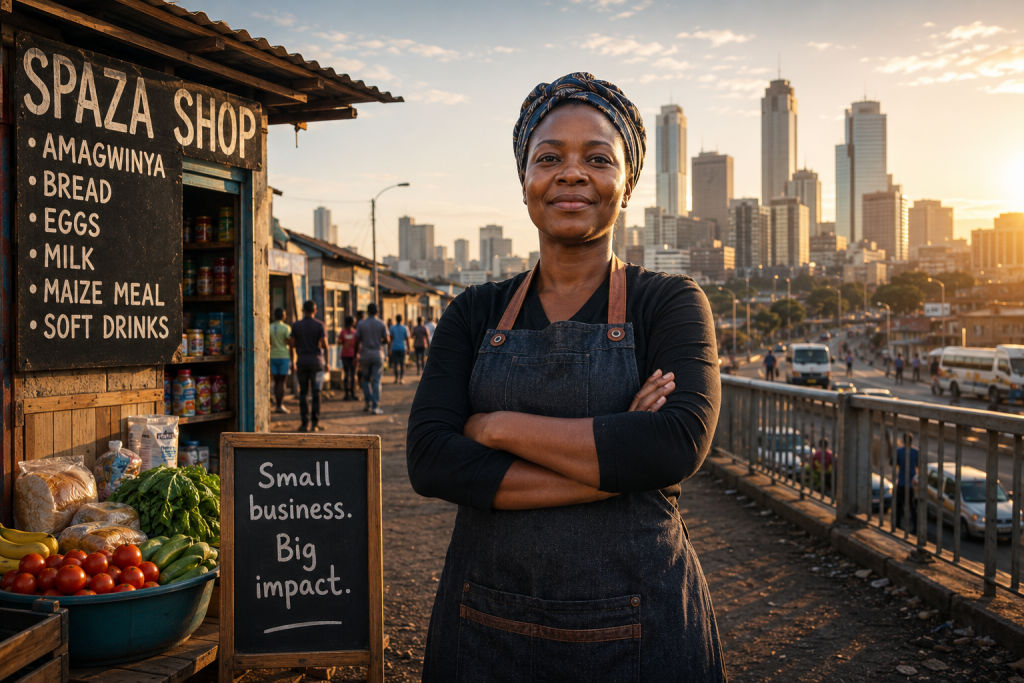
One economy has boardrooms, balance sheets, funding committees, and investment conferences. The other economy wakes up before sunrise to set up a vegetable stall on a street corner, open a spaza shop, fire up a township bakery, or prepare for another day of selling in a market that often feels forgotten.
Yet both economies are driven by the same thing: people trying to build a better life.
The challenge is that while we often speak about economic inclusion, very few are willing to walk the bridge that connects these two worlds.
The truth is that township businesses have never lacked ambition. What they have lacked is access.
Access to funding.
Access to markets.
Access to information.
Access to the people who make decisions.
For decades, township entrepreneurs have built businesses with little more than faith, resilience, and determination. We have seen women put children through school by selling vegetables on a street corner. We have seen tavern owners work tirelessly to ensure their families have food on the table. We have seen mechanics, hairdressers, seamstresses, and countless other entrepreneurs create jobs where there were none.
These are not side hustles.
These are real businesses.
They are businesses that support families, create livelihoods, and keep local economies alive.
Yet many of these entrepreneurs remain invisible to the systems designed to support them.
Banks, development finance institutions, and governments have introduced numerous programmes aimed at township economic development. Across South Africa and the world, there has been a growing recognition that small businesses need support if economies are to grow inclusively.
The intention is good.
The execution is where the challenge remains.
Too often, funding ecosystems reward those who already understand how to navigate them. Those with access to networks, advisors, consultants, and decision-makers find it easier to participate. Meanwhile, the entrepreneur who spends twelve hours a day running a business is often left behind because they do not know the right people, speak the right language, or have the right paperwork.
The result is that opportunities designed to create inclusion sometimes end up excluding the very people they were created for.
This is where trust becomes important.
If we truly want to build an inclusive economy, we must start by listening.
Listening to the trader who understands customer behaviour better than any market report.
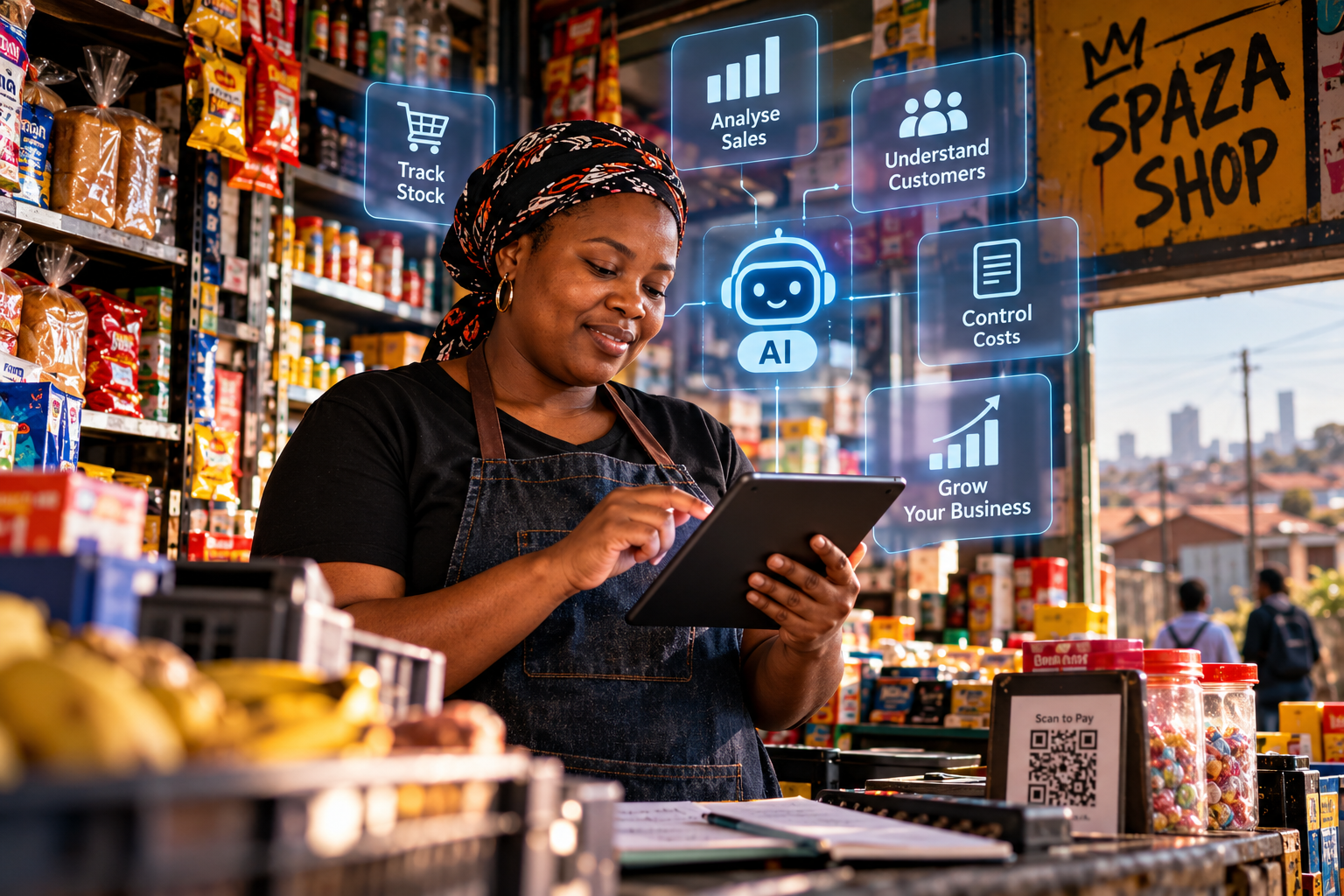
Listening to the spaza shop owner who knows the needs of the community better than any consultant.
Listening to the entrepreneur who has survived for years without formal funding and understands resilience better than any business textbook.
Everyone has a story.
Everyone has something to contribute.
The question is whether those with influence are willing to listen.
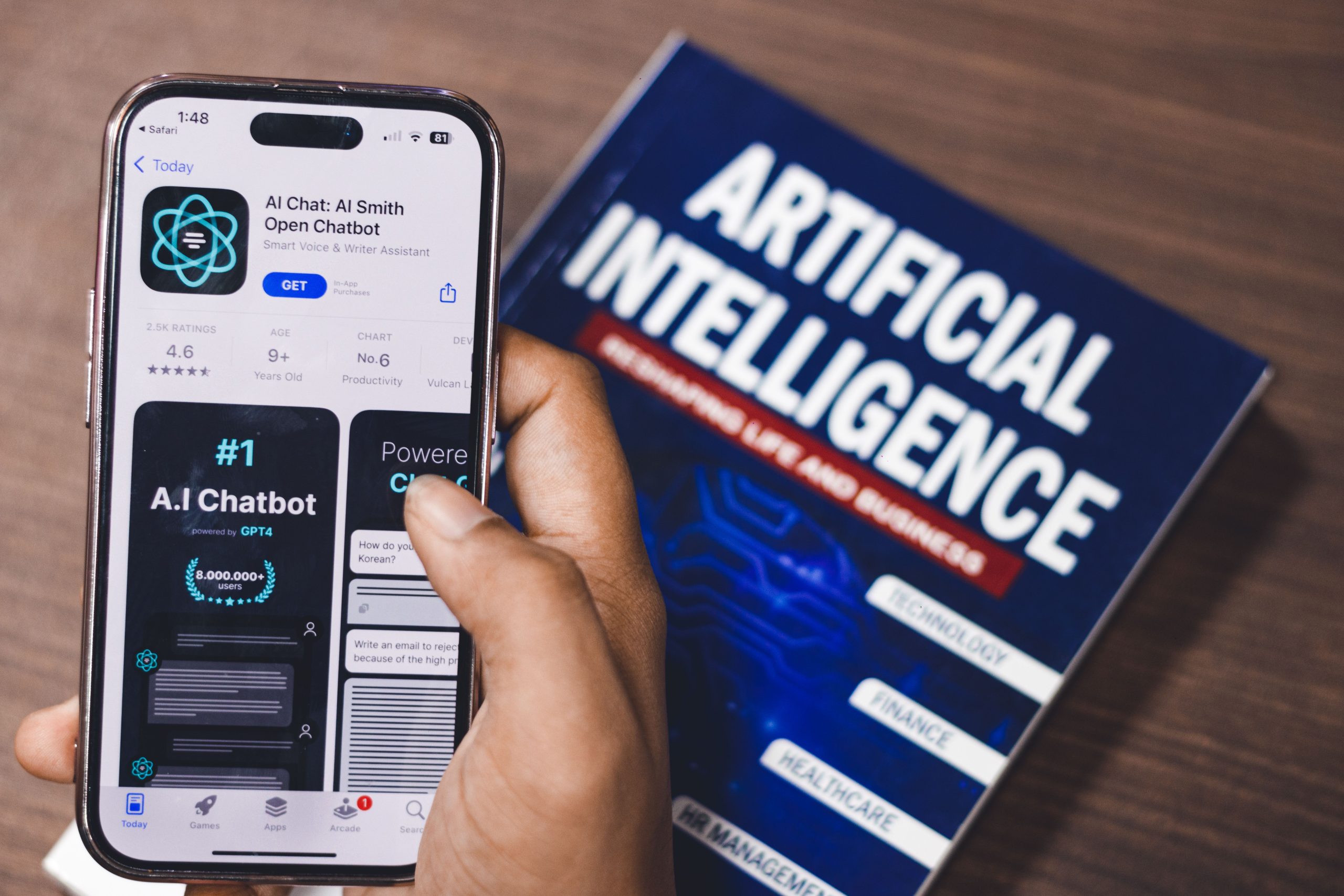
As we enter the age of Artificial Intelligence, another challenge emerges.
Will AI create new opportunities for township businesses, or will it widen existing inequalities?
Technology should not become another bridge that only a few can cross.
The future cannot belong only to businesses with access to expensive tools, specialised knowledge, and advanced infrastructure. It must also belong to the entrepreneur running a business from Soweto, Tembisa, Khayelitsha, Umlazi, Mdantsane, and countless other communities across our country.
Township businesses deserve more than survival.
They deserve a fighting chance to thrive.
They deserve access to capital that understands their realities.
They deserve technology that empowers them rather than excludes them.
They deserve ecosystems that see potential before paperwork.
Most importantly, they deserve a seat at the table when decisions are made about their future.
Perhaps the bridge less walked is not built with money alone.
Perhaps it is built with trust.
Trust that the entrepreneur in the township matters.
Trust that economic growth can come from every corner of society.
Trust that when given a fair opportunity, ordinary people can achieve extraordinary things.
Because if we can bridge the divide between South Africa’s two economies, we will not simply create more businesses.
We will create an economy where everyone counts.
An economy where everyone belongs.
And an economy where everyone has a genuine shot at making it.