The Township Tavern Transformation
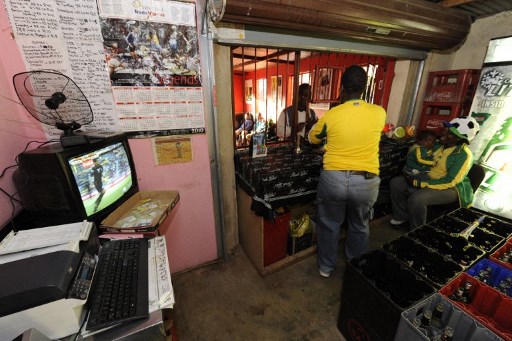
For years, the township tavern has been treated as a simple business model: a place to buy alcohol, watch football, listen to music and socialise.
But perhaps we have been looking at it too narrowly.
Because behind the tavern is something far more valuable: an established customer base, a physical location, supplier relationships, community trust and an understanding of township consumers that many formal businesses spend millions trying to acquire.
The question is no longer whether the township tavern has a place in the future of the township economy.
The question is:
What can the township tavern become?
From tavern to township lifestyle hub
The opportunity is to move beyond the traditional tavern model and begin thinking about the tavern as a multi-purpose commercial and lifestyle destination.
A tavern could be a breakfast and coffee spot in the morning.
A place for meetings, connectivity and business during the day.
A sports-viewing destination in the afternoon.
A food and entertainment venue in the evening.
On weekends, it could become a platform for local DJs, musicians, comedy, fashion, cultural events and community experiences.
The building doesn’t necessarily need to change dramatically.
The business model does.
And that is where the real opportunity lies.
The township economy does not always need something new
One of the challenges in conversations about township economic development is that we often approach the township as though nothing exists.
We talk about bringing formal businesses into the township.
We talk about building new retail centres.
We talk about introducing new financial services, new technology and new infrastructure.
All of these are important.
But there is another question we should be asking:
What if some of the infrastructure we need is already there?
The township tavern is already embedded in the community.
It already knows its customers.
It already has foot traffic.
It already has relationships with suppliers.
It already understands local events, local culture and local consumer behaviour.
What it often lacks is access to the systems, capital, technology, expertise and partnerships that can help it transition from a survival business into a growth business.
The opportunity is in the transformation
Imagine taking an existing township tavern and introducing proper point-of-sale systems, digital payments, financial management, improved stock controls and a stronger food offering.
Then introduce entertainment programming.
Create branded experiences.
Develop advertising opportunities.
Build partnerships with financial institutions.
Introduce Wi-Fi and digital services.
Create spaces for local entrepreneurs to showcase their products.
The tavern begins to generate revenue from more than one activity.
Food. Entertainment. Events. Advertising. Experiences. Retail.
Suddenly, we are no longer talking about simply upgrading a tavern.
We are talking about building a township commercial ecosystem.
A new opportunity for brands
This should also change how corporates think about township businesses.
For too long, the township tavern has primarily been viewed as a distribution point.
A place to get a product into the hands of consumers.
But what if brands approached the tavern as a business partner?
Instead of simply putting a logo on a wall, a brand could help finance a refrigeration upgrade, provide digital business tools, support entertainment programming, introduce financial literacy, improve food infrastructure or help the owner professionalise the business.
The brand benefits from deeper consumer engagement.
The entrepreneur benefits from a stronger business.
The consumer benefits from a better experience.
And the township economy benefits from a more sustainable enterprise.
That is what meaningful economic participation should look like.
Formalisation should not mean displacement
There is an important distinction we need to make.
Formalising the township economy should not mean replacing township businesses with formal businesses.
It should mean helping existing businesses become more formal, more productive and more scalable.
The tavern is just one example.
The same thinking can be applied to the salon, the car wash, the mechanic, the spaza shop, the local restaurant, the butcher and countless other businesses that form the everyday commercial infrastructure of township life.
These businesses may not always look like the businesses found in Sandton.
But they are businesses.
They employ people.
They circulate money.
They have customers.
They create livelihoods.
And many of them have survived without the infrastructure and institutional support that formal businesses take for granted.
The next township growth story is about scale
The township economy does not only need more entrepreneurs.
It needs bigger entrepreneurs.
It needs businesses that can move from employing two people to employing ten.
Businesses that can move from one location to three.
Businesses that can access finance.
Businesses that can use technology.
Businesses that can keep proper financial records.
Businesses that can become suppliers to larger corporations.
Businesses that can build brands beyond their immediate neighbourhood.
That is the transition from survival to scale.
And it requires a different kind of partnership between township entrepreneurs and the formal economy.
The tavern is a test case for a bigger idea
The future of the township economy will not necessarily be created by replacing what already exists.
It may be created by seeing what already exists differently.
The township tavern has the potential to become a hospitality business, an entertainment platform, a food destination, a community hub, a media space and a commercial ecosystem.
The same applies across the township economy.
We need to stop asking only:
“What can we bring into the township?”
And start asking:
“What can we build from what is already there?”
Because sometimes the next big growth opportunity isn’t sitting in a new shopping centre.
It is sitting behind an existing counter, inside an existing business, serving an existing customer.
We just need to see the opportunity differently.