
As South Africa heads towards the 4 November 2026 local government elections, a key question emerges: what will the next municipal councils do to support the township economy?
Municipal councils make decisions that directly affect where businesses can trade, how entrepreneurs access infrastructure, whether local suppliers secure municipal contracts and how communities attract investment.
As an important driver of economic activity and livelihoods across the country, the township economy deserves closer attention ahead of the elections. From spaza-shop owners and informal traders to food producers, manufacturers and township-based service providers, entrepreneurs rely on an enabling environment to operate, create jobs and grow their businesses.
Recent national polling ahead of the elections places the African National Congress (ANC) and Democratic Alliance (DA) at the front, with the ANC polling at 32% and the DA at 26%, followed by the uMkhonto weSizwe (MK) Party at 12% and the Economic Freedom Fighters (EFF) at 8%. These figures are from a Social Research Foundation/Victory Research poll conducted between 18 September and 12 October 2026. However, national polling does not necessarily reflect support at municipal level, where local issues and political dynamics can produce different outcomes.
For a spaza-shop owner, street trader, food producer or township manufacturer, the outcome of these elections could have practical implications for the cost of doing business, access to trading spaces, infrastructure and opportunities to expand.
With this in mind, KBNN examines what five of South Africa’s major political parties — the ANC, DA, MK Party, EFF and Inkatha Freedom Party (IFP) — are proposing in their local government manifestos to support township businesses and economic development.
Editor’s note: This is an independent editorial article. KBNN has not been paid by any political party to produce this content and is not affiliated with any political party.
- African National Congress (ANC)
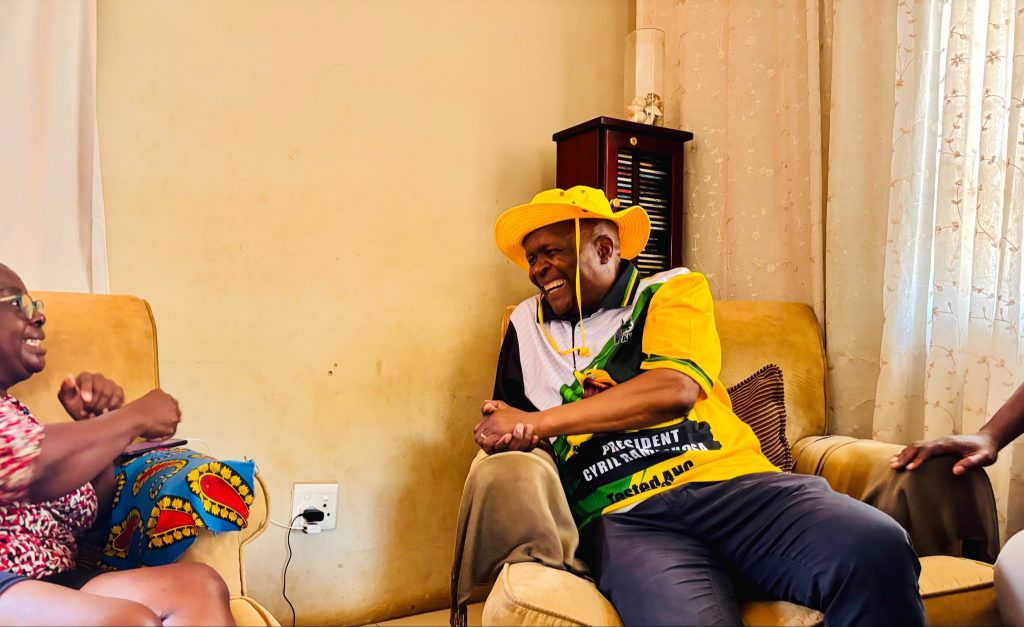
In its manifesto, the ANC commits to investing in township and rural economic infrastructure, with a focus on sectors including manufacturing, agro-processing, agriculture, tourism, the creative economy, digital industries and green industries.
“The ANC will ensure that municipalities expand access to affordable trading spaces, markets, local enterprise hubs and workspaces. We will focus on supporting cooperatives, informal traders, home-based businesses, the creative sector and gig workers,” the party states in its manifesto.
The ANC also says municipalities should attract investment and develop industries suited to their local economies, creating employment opportunities closer to where people live.
Additionally, the party proposes improving turnaround times for planning approvals, building plans, rezoning and licensing. While these commitments are not all explicitly framed around the township economy, they could help reduce administrative delays for businesses operating in townships.
- Democratic Alliance (DA)

While the DA does not frame its entire economic programme specifically around the township economy, its manifesto places emphasis on small businesses, informal traders and private-sector investment.
As reported by Daily Maverick, the party has proposed simpler electronic registration for informal traders and designated trading spaces equipped with water, sanitation, lighting and Wi-Fi.
The DA also wants to reduce administrative barriers that make it difficult for entrepreneurs to establish and operate businesses. Among its proposals is a “silence-is-consent” approach for certain applications that municipalities fail to process within the required time.
On its official 2026 Local Government Manifesto page, the party outlines its approach to local economic development:
“Creating jobs and growing local economies by cutting red tape, supporting small businesses and informal traders, improving transport, unlocking investment, releasing well-located land and delivering title deeds.”
For township entrepreneurs, these proposals could have implications for access to trading spaces, business registration and the infrastructure needed to operate sustainably.
- uMkhonto weSizwe (MK) Party
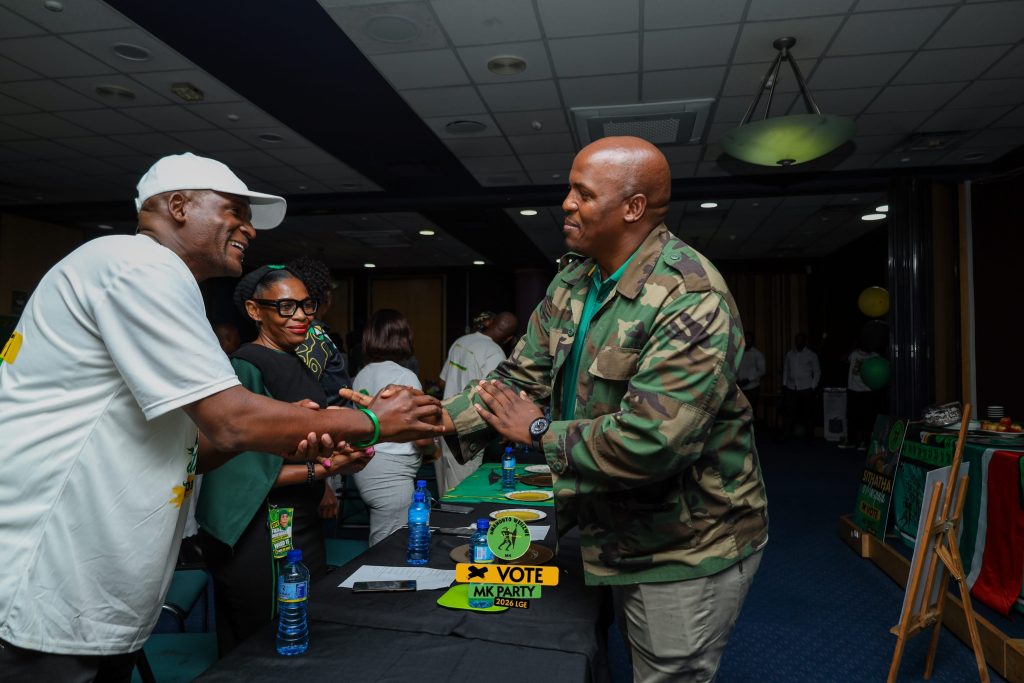
The MK Party is a significant feature of South Africa’s changing political landscape following its emergence in the 2024 general election, particularly in KwaZulu-Natal. Its 2026 local government campaign raises an important question: how will its broader economic transformation agenda translate into practical support for township entrepreneurs?
In its 2026 local government manifesto, the party identifies townships and rural areas as underserved and underdeveloped, arguing that residents remain far from employment and economic opportunities. It positions addressing these inequalities as a priority for municipal government.
In its broader economic programme, MK proposes expanding special economic zones, improving access to development finance for small, medium and micro enterprises (SMMEs), and reviewing regulatory barriers affecting Black-, women- and youth-owned businesses. Its proposed economic interventions cover sectors including manufacturing, mining and agriculture.
The party has also made proposals specifically concerning township retail. In May 2026, SABC News reported that MK had submitted a private member’s bill proposing that spaza-shop ownership be reserved for South African citizens. The party presents the proposal as a measure intended to promote economic inclusion.
However, this remains a legislative proposal and should not be confused with an enacted law.
- Economic Freedom Fighters (EFF)
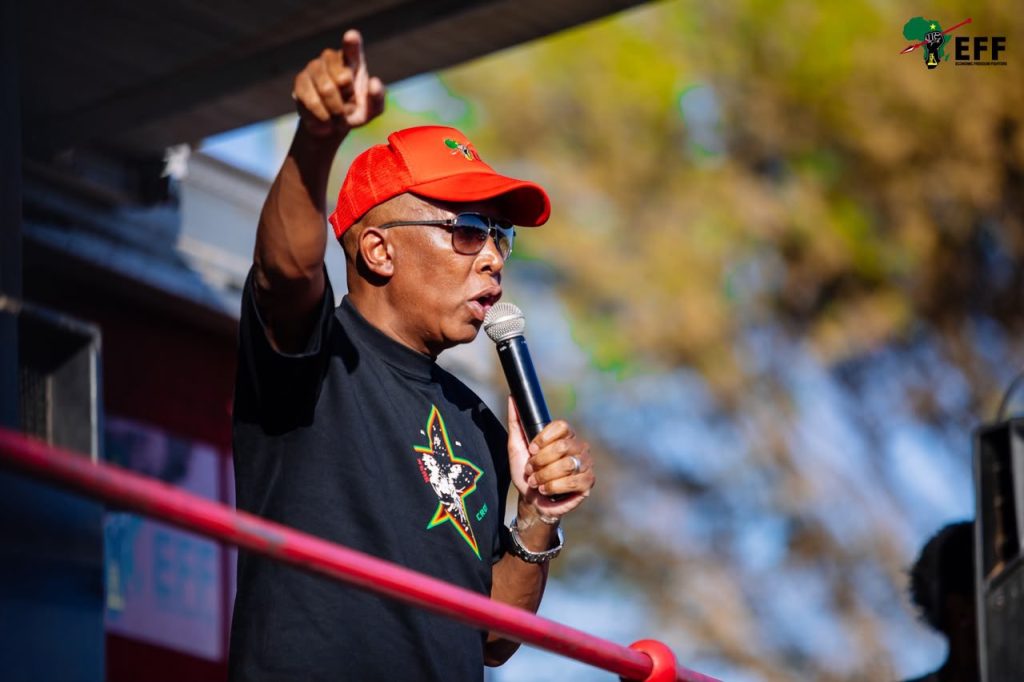
The EFF’s local government programme focuses on economic redistribution, employment creation and improving access to basic services. In a press statement released in July, the party said:
“An EFF people’s municipality will guarantee reliable and affordable basic services and ensure that qualifying poor households receive free water, electricity, sanitation, and refuse removal, including those living in informal settlements, backyard dwellings, and rural communities.”
One of the more specific commitments in its manifesto concerns municipal procurement. The EFF proposes allocating at least 80% of municipal procurement to local SMMEs, cooperatives and township enterprises involved in manufacturing-related economic activities.
The party also proposes trading spaces equipped with water, sanitation, electricity and storage facilities, supported by municipal by-laws that accommodate informal trading.
Further proposals include township and rural industrial hubs, municipal business-support centres, financing assistance and logistics infrastructure intended to connect small producers and enterprises to markets.
These commitments could be particularly relevant to township manufacturers, food producers, informal traders and entrepreneurs seeking opportunities to supply local government.