By Omelele Mmbo, Business Development Head at FNB
South Africa has no shortage of entrepreneurial spirit. Every day, individuals take the brave step of starting businesses, often navigating significant personal, financial and economic risks to pursue an opportunity or solve a problem. We rightly celebrate the courage, determination and resilience it takes to build a business from the ground up.
However, while much attention is given to helping businesses get started, far less focus is placed on supporting them as they move beyond the start-up phase. Once the hard work of establishing a business is done, why do so many struggle to maintain momentum and grow into larger, more sustainable enterprises?
This is where South Africa’s scale-up support gap becomes evident.
The capabilities that help an entrepreneur survive the early stages of a business are not necessarily the same ones required to grow. Scaling is often treated as a natural next step, but growth is not automatic. It needs to be deliberate, structured and aligned with what the next stage of the business demands.
One of the biggest constraints to SME growth is that many entrepreneurs remain stuck in start-up mode for too long. In the early days, the founder typically does everything — acting as CEO, salesperson, buyer and problem solver.
That is often necessary at first, but it can become a constraint when the business needs to grow beyond the reach of one person. At some point, the founder needs to move from working in the business to working on the business by building teams, systems and decision-making structures that reduce reliance on a single individual.
There is also a risk in mistaking opportunity for readiness.
Consider a small manufacturer producing 500 candles a month from a garage that secures a major retail contract for 30,000 units. On paper, this looks like a breakthrough. In reality, it can place the business under severe strain if the capacity to deliver is not in place.
Access to market, therefore, is not the only determinant of growth. Opportunity without readiness can expose weaknesses across a business. If an owner takes on debt to fulfil a large order but cannot deliver efficiently, expected income may not materialise in time, leaving the business overextended and vulnerable to cash-flow pressure. In some cases, this can threaten the survival of the business.
Scaling is not simply about securing more orders. It places pressure on production, premises, stock management, cash flow, staffing, delivery and customer experience.
It also changes the competitive environment.
When a product proves successful, competitors respond, larger players may enter the market and margins can come under pressure. A business that wants to scale must therefore understand its numbers, including its cost base, pricing, margins, capacity and competitive differentiation. Growth without this clarity can increase activity without necessarily strengthening resilience.
For these reasons, businesses that scale successfully are often those that build capacity before growth arrives. Capacity is not only about physical expansion; it also means developing systems, processes and ways of working that are repeatable.
A business may feel too small to invest in these areas, but they are the foundations required to support sustainable growth.
Scale also requires entrepreneurs to take a broader view of their customers. Growth does not always come from simply selling more of the same product. It can come from understanding the wider customer journey and identifying where additional value can be created.
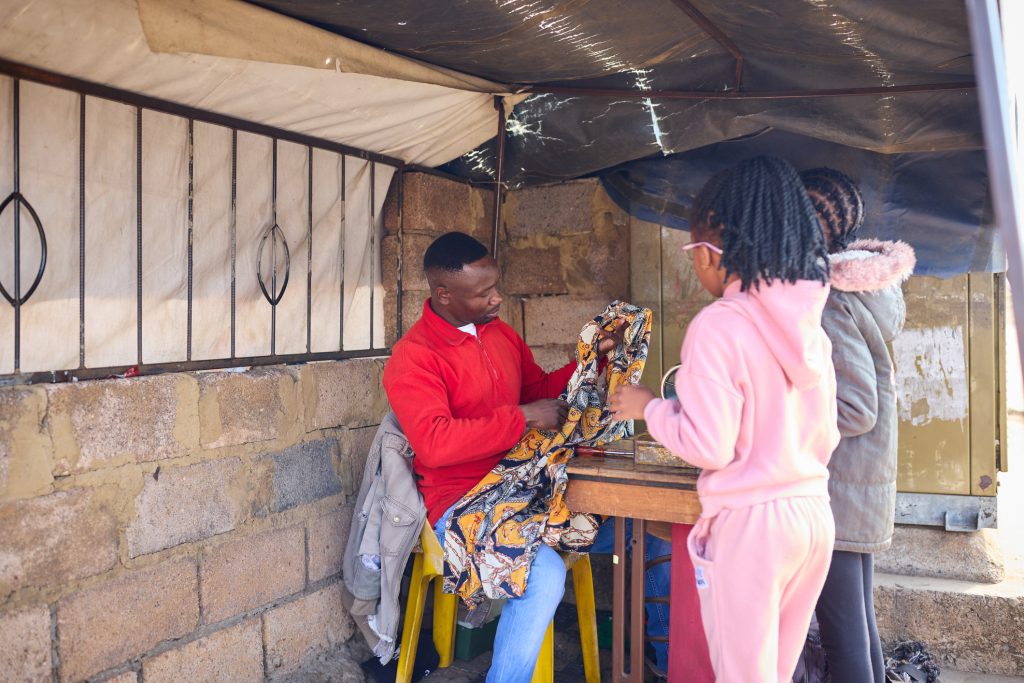
A spaza shop that sells bread, for example, can grow by recognising what customers need alongside it and responding to those needs, rather than focusing solely on increasing the volume of bread sold.
Entrepreneurs also do not operate in isolation. The partners around them can play an important role in determining whether they are able to scale.
For banks, this role goes beyond providing funding. Greater value can come from helping business owners assess whether they are ready to scale, while providing the insights, tools and networks needed to support responsible growth.
South Africa has many businesses with proven potential, but too few are adequately supported through the transition from start-up to sustainable growth.
Closing this gap is not simply about creating more businesses. It is about helping build stronger, more resilient enterprises that can create jobs, participate in supply chains and contribute meaningfully to South Africa’s economy.
The next chapter of entrepreneurship should not only be about starting businesses. It should be about helping the businesses that have already started become strong enough to grow.
Editorial note: This opinion piece was provided by FNB and represents the views of the contributing author. It does not necessarily reflect the views or position of KBNN.