
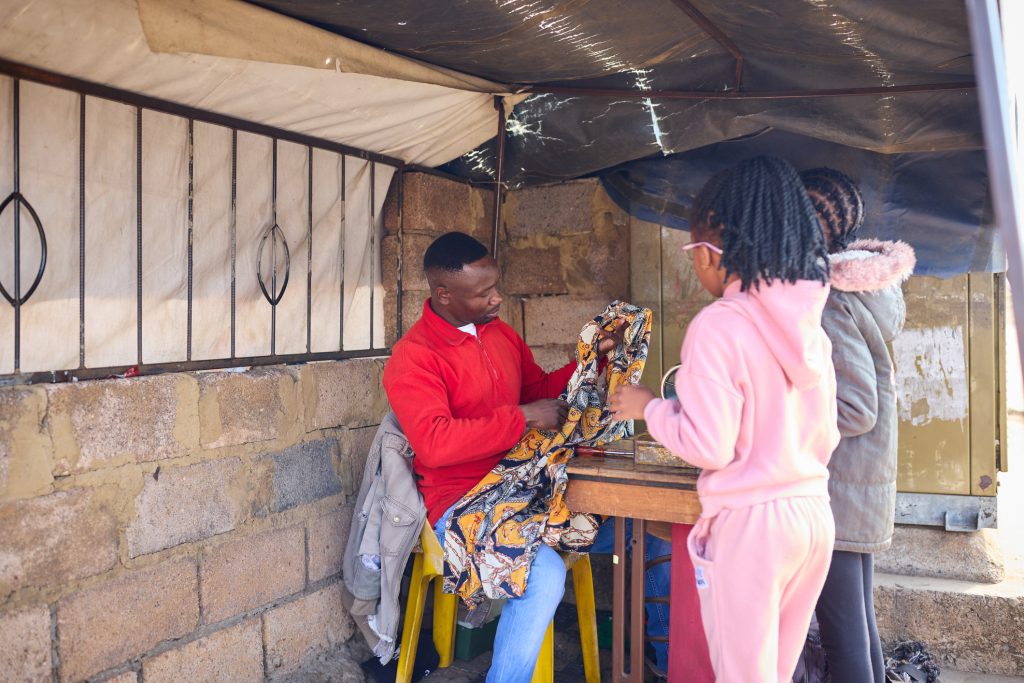
South Africa is obsessed with creating entrepreneurs.
Every year, we invest millions into entrepreneurship programmes, incubators, enterprise development initiatives, and startup competitions. We celebrate the number of businesses being started and the number of people entering the entrepreneurial ecosystem.
Yet one question continues to bother me, who are these businesses trading with? Because entrepreneurship, on its own, is not an economy.
Trade is.
A business can be funded. A business can be trained. A business can be mentored. But if that business cannot access markets and generate consistent transactions, it remains trapped in a cycle of survival.
And this is where I believe we have been getting it wrong. For years, the township economy conversation has focused on helping businesses start. Very little attention has been given to helping businesses trade with one another.
Think about it.
A furniture manufacturer in Soweto should know where to source materials from a township supplier in KwaZulu-Natal. A fashion entrepreneur in Khayelitsha should be able to sell products into township retail networks in Limpopo. A food producer in the Free State should be able to access customers in Gauteng without having to break into traditional distribution channels first. Yet these connections rarely happen. Not because the businesses don’t exist. But because the ecosystem to connect them does not and that is costing us more than we realise.
The township economy is often described as an untapped market. I disagree. The township economy is not untapped. It is disconnected.
Across South Africa, thousands of township businesses are operating every day. They are buying. They are selling. They are producing. They are innovating.
What they are not doing enough of is trading with one another.
Imagine the impact if township businesses across all nine provinces were connected through structured trade agreements, verified supplier networks, shared logistics systems, and coordinated procurement opportunities.
Imagine if township businesses became each other’s customers.
Imagine if money circulating within township economies stayed within township economies for longer. Imagine if local procurement evolved into township-to-township procurement. That is when we begin moving from entrepreneurship to economic participation. That is when we begin moving from isolated businesses to integrated value chains. That is when we begin creating real economic inclusion. This is why I believe the next frontier of township economic development is not funding.
It’s trade.
More specifically, inter-provincial township trade.
At KBNN, we have begun exploring what an Inter-Provincial Township Business Trade Agreement could look like, a framework designed to connect township enterprises across South Africa and unlock opportunities beyond geographic boundaries.
Not as a development programme. Not as a handout.
But as a market.
Because sustainable economic growth does not happen when businesses are supported. It happens when businesses transact. The future of the township economy will not be determined by how many entrepreneurs we create. It will be determined by how many trading relationships we build. And perhaps that is the question we should all be asking.
What would happen if township businesses became each other’s biggest market?