Over the past few weeks, global headlines have been dominated by the escalating Middle East crisis, which reached a major turning point at the end of February 2026 when the United States and Israel launched large-scale airstrikes on Iran. The strikes killed key leaders and triggered a wider regional conflict. In the weeks that followed, throughout March 2026, Iran retaliated with missile and drone attacks across the region, including a significant strike on energy infrastructure, the 18 March 2026 attack on the South Pars gas field, which disrupted global energy supply and pushed oil prices sharply higher.
Fast forward to April, and the ripple effects are being felt across the globe, including in South Africa. Rising oil prices have translated directly into higher fuel costs, placing many in a precarious economic position, but none more so than those within the township economy. As of 1 April 2026, South Africa implemented one of the largest fuel price hikes in its history, despite government intervention. Petrol increased by R3.06 per litre, while diesel surged by over R7.30 per litre.
According to reports, the spike in diesel prices has had an “immediate and severe” impact on South Africa’s road freight sector, where diesel accounts for between 35% and 55% of total operating costs, and can exceed 60% during periods of volatility. The Road Freight Association (RFA) noted that basic daily diesel costs for operators rose by more than 32.5% on 1 April, forcing transporters to increase tariffs. As a result, moving goods from Gauteng to Durban now costs over R2,200 more, while trips to Cape Town have increased by more than R5,300.
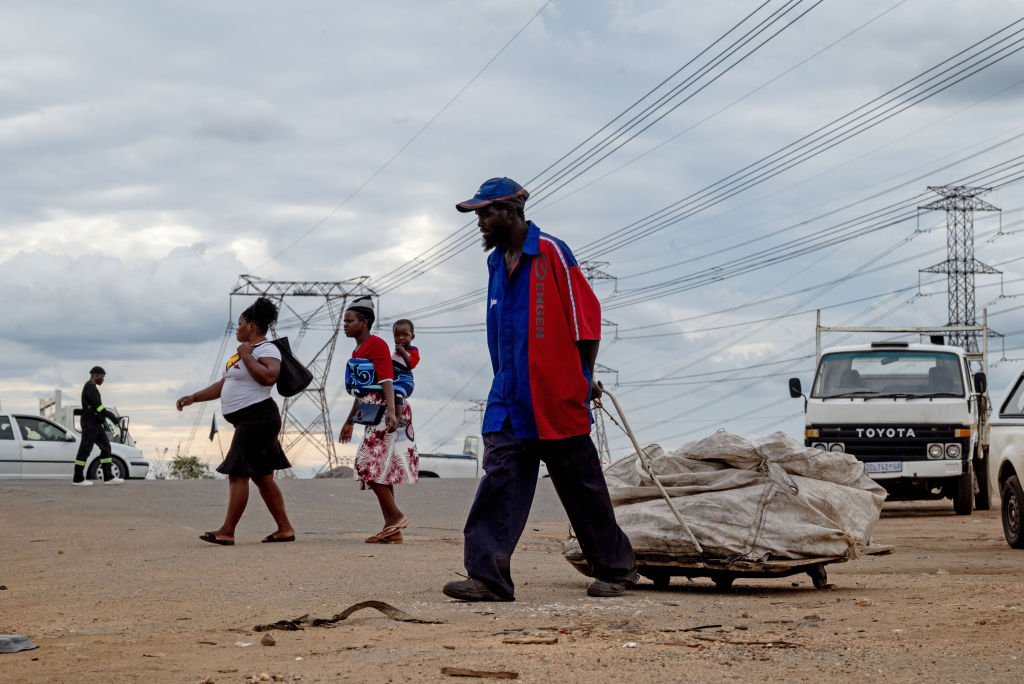
For the township economy, the implications are particularly acute. This sector is highly dependent on informal trade and daily cash flow, making it extremely sensitive to price shocks. One of the most immediate pressure points is transport. Many township residents rely on public transport and often travel long distances to access employment opportunities. As fuel prices rise, taxi fares inevitably increase, placing additional strain on already stretched household budgets.
At the same time, higher fuel costs drive up food prices, as transport and production expenses are passed on to consumers. For low-income households, this means reduced disposable income, forcing difficult trade-offs between essentials such as food, transport, and electricity. The result is a tightening economic cycle where less money circulates within township communities, directly impacting local businesses.
While the government attempted to cushion the blow by reducing the fuel levy by approximately R3 per litre for petrol and nearly R4 for diesel at the end of March, many argue the intervention came too late. The Organisation Undoing Tax Abuse (OUTA) criticized the timing, noting that earlier communication could have helped households and businesses better prepare.
“Government cannot keep reacting at the last minute while households and businesses carry the uncertainty,” said OUTA CEO Wayne Duvenage. “This relief is welcome, but it should have been communicated earlier to allow people to plan and absorb the impact.”
Beyond households, small businesses, the backbone of township economies, face mounting pressure. Rising fuel and food prices significantly increase operating costs, from transporting goods to sourcing raw materials. Many informal traders and small enterprises are forced to either absorb the costs, reducing already thin profit margins, or pass them on to consumers, risking a decline in demand. In a price-sensitive environment, this can be the difference between survival and closure.
Ultimately, while the Middle East conflict may seem geographically distant, its consequences are both economic and human. As the conflict has intensified into April, reports indicate that hundreds of lives have already been lost across multiple countries in the region, with civilian populations increasingly caught in the crossfire.
This human toll underscores the broader gravity of the crisis, reminding us that beyond fuel prices, freight costs, and economic strain, the conflict is rooted in profound loss and instability because real people are losing their lives and communities are being destabilised. In an interconnected world, these events do not exist in isolation; they reverberate globally, shaping both the cost of living and the human condition far beyond the region itself.