By Kei Rapodile
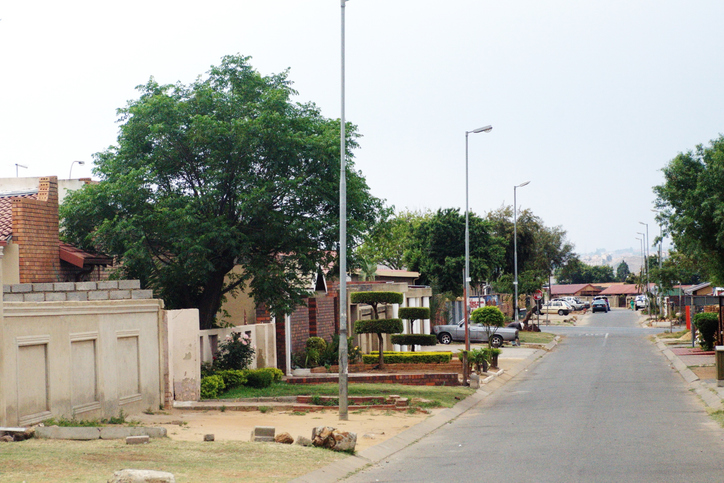
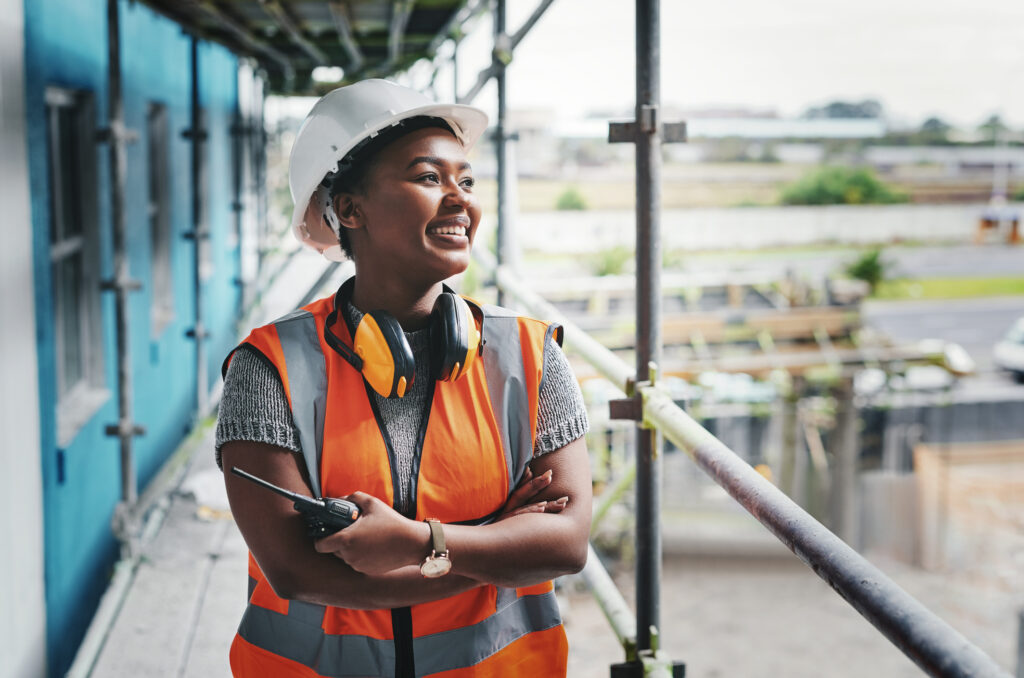
In the heart of South Africa’s townships, where corrugated iron shacks stand shoulder to shoulder with newly built RDP homes, another kind of foundation is being laid—not of brick and mortar alone, but of resilience, opportunity, and transformation. Women are entering construction in growing numbers, and they are not just workers. They are owners, innovators, and, in some cases, the new powerhouses of the township economy.
Construction in South Africa has long been male-dominated. Women still make up just over 10% of the national workforce, a statistic that masks the depth of their contribution. In townships, however, the equation is changing. Construction here is less about skyscrapers and mega-projects and more about building homes, upgrading schools, fixing water systems, and installing solar energy systems. It is practical, visible, and community-centred. In a country where youth unemployment sits at 43.8% (ages 15–34, Q1 2024), the role of women in construction can no longer be viewed as symbolic. It is economic survival, job creation, and a direct response to the township reality, where a young woman often becomes the breadwinner holding an entire household together.
To understand the scale of the opportunity, it is necessary to look at who owns construction in South Africa. A 2023 CIDB review revealed that while women-owned construction companies are growing, they remain concentrated in the lower CIDB grades (1–3), where contracts are small and margins thin. The upper tiers—Grade 7 and above, where the big projects sit—are still dominated by men, mostly white-owned firms, despite three decades of democracy. Yet, there are outliers that prove what is possible. Motheo Construction Group, founded by the late Dr. Thandi Ndlovu in 1997, is South Africa’s largest black female-owned construction company. Today, 35% of the business is owned by black women, and four board members are black women. GVK-Siya Zama, one of South Africa’s oldest construction groups, has steadily improved its gender equity metrics, with women now active in senior leadership and project oversight roles. At the SME level, organisations like SAWiC (South African Women in Construction) are mobilising female contractors and creating cooperatives that win local projects collectively. The data shows a split reality: ownership at the top is still limited, but in the township trenches, women are planting the seeds of the next generation of construction empires.
Former President Thabo Mbeki’s Vukuzenzele campaign—“arise and act”—echoes loudly in this movement. For township women, waiting on government housing projects or NGO interventions is no longer the model. They are welding their own gates, building extensions for neighbours, forming cooperatives to win school renovation tenders, and taking short courses in plumbing or electrical work to expand their scope. This is Vukuzenzele in its purest form: communities lifting themselves by building themselves.
The barriers to entry for women in construction are real. Finance remains the biggest challenge. Banks see small female-led contractors as “high risk,” leaving them dependent on personal savings or stokvels. Cultural stereotypes persist, with women often undermined on-site or pushed into administrative rather than technical roles. There is also the systemic hurdle of moving from micro-projects to formal CIDB grading, which allows women to compete for bigger contracts. Yet, the cracks are widening. Township women are leveraging training programs such as NHBRC’s 24-month Women Empowerment Programme and targeted courses at TVET colleges. They are also using technology, from digital tender platforms to project management apps, to make running a small firm leaner and more professional. Networks such as SAWiC, the Women in Construction Awards, and local incubators are providing visibility and legitimacy.
The township context itself provides a distinct advantage. In Sandton or Cape Town CBD, construction is controlled by large corporates with high barriers to entry. In Soweto, Mdantsane, Tembisa, or Kuruman, the demand is constant and hyperlocal: an extra room for a growing family, a spaza renovation, a crèche extension, or a borehole installation. These projects are smaller, faster, and community-driven, giving women contractors—often trusted by their neighbours—an opportunity to secure work and scale gradually. An RDP extension today can become a municipal tender tomorrow, illustrating a model of incremental growth.
South Africa’s construction sector is projected to grow at over 3% AAGR between 2024 and 2027, and the space for women to lead that growth is widening if systemic barriers are addressed. This is not charity. McKinsey research shows that companies in the top quartile for gender diversity are 25% more likely to outperform financially. Gender equity in construction is both fair and profitable. When township women step into construction, they are not just breaking gender norms—they are creating new economic models for township development: jobs in areas with the highest unemployment, infrastructure where it is most needed, and wealth where it is most absent.
Township construction is more than a sector; it is a battleground for economic dignity. The women putting on hard hats today are not simply building walls and roofs—they are building legacies, businesses, and pathways out of poverty. From Vukuzenzele to township entrepreneurship, the message is the same: don’t wait for change, build it. In South Africa’s townships, women are proving every day that they can—and will—build the future, one brick at a time.