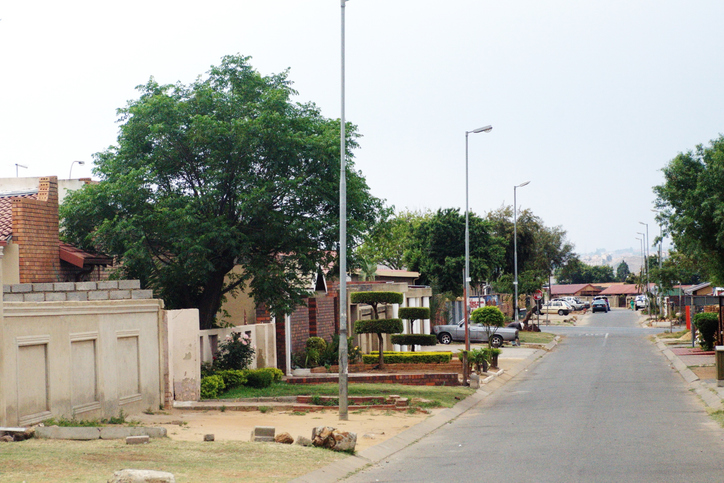
A recent Business Insider report revealed something that still surprises many: Soweto, one of South Africa’s largest townships, is the wealthiest township in the country based on income and property values.
The data comes from Lightstone, a company providing property valuations and market intelligence across South Africa. Hayley Ivins-Downes, Lightstone Managing Executive Real Estate & Director at Prop Data, told Business Insider that the townships of Soweto, Umlazi, and Khayelitsha reflect the true pulse of the nation’s housing market. “Townships like Soweto, Umlazi, and Khayelitsha reflect South Africa’s urban reality in ways that city skylines cannot,” she said. “While each carries the weight of inequality and historic disadvantage, they are also centres of growth, resilience, and entrepreneurship.”
Yet, the fact that Soweto leads in wealth should surprise few—but it still does. Historically, townships in South Africa have been labelled as informal, crime-ridden, and underdeveloped. Property value has rarely been part of that narrative, even though the numbers tell a different story. According to Roger Wilco’s 2022 Township CX Report, the sector’s total market value is estimated at R900 billion ($48 billion), with roughly 60% considered formal and 40% informal. Over R20 billion ($1 billion) of that comes from the ‘backroom’ rental market alone. “I think it’s potentially double that, but let’s just stick with R20 billion,” says GG Alcock, author of KasiNomics, to FORBES AFRICA. Township spaza (shop) rentals generate another R25 billion ($1.3 billion) a year.
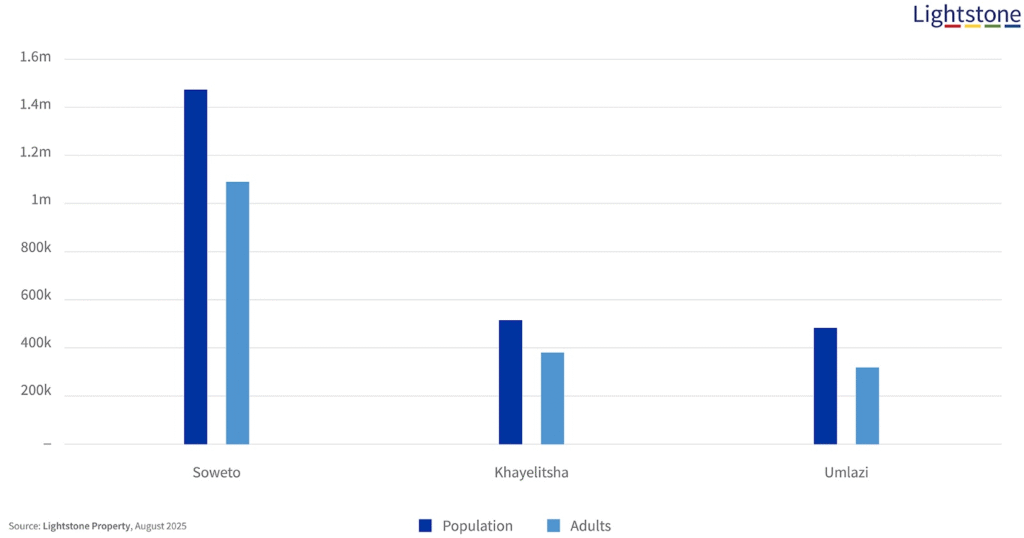
There are approximately 1.4 million township residential properties in South Africa, valued collectively at around R240 billion, with an average property value of R174,000. Lightstone notes that Soweto, near Johannesburg, has about 1.5 million residents, Umlazi houses 486,000 people, and Khayelitsha is home to 520,000 residents. These townships reflect South Africa’s complex socio-economic legacy, marked by inequality, resilience, and community spirit.
So why do some people still doubt the value of township property? Townships are often associated with poverty, informal settlements, and underdevelopment, a perception rooted in apartheid-era spatial planning. Many investors still view these areas as risky, despite decades of economic growth, formal housing projects, and thriving entrepreneurship. Property prices in townships are also significantly lower than in major cities. Soweto’s average property, for instance, is R585,000, compared to Johannesburg proper at three times that amount. Some buyers mistakenly equate lower prices with low value, overlooking the strong potential for high returns through appreciation and rental income.
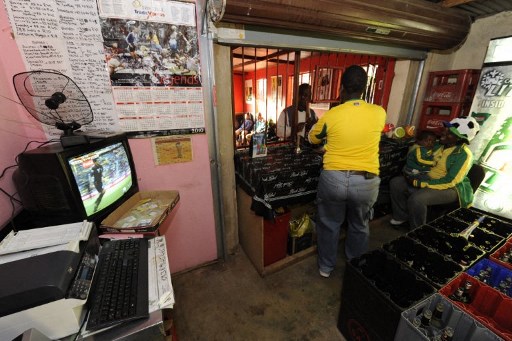
The vibrance of township economies is still largely underreported. Small business, retail, and informal trade thrive here, yet many investors see only subsistence activity. This perception ignores the growing buying power of township residents, which drives strong rental demand and retail property growth. People don’t always see the value in township property because of outdated perceptions, a focus on city-centric luxury markets, and a lack of awareness about the economic growth happening in these areas.
The reality is clear: townships like Soweto are not just growing—they are thriving, with rising property values, higher household incomes, and strong market activity. The data is clear. The wealth is real. It’s time to start seeing townships not as marginal spaces, but as key drivers of South Africa’s property and economic future.